Forward vs Forwards Simple Guide With Examples (2026)

Forward vs Forwards

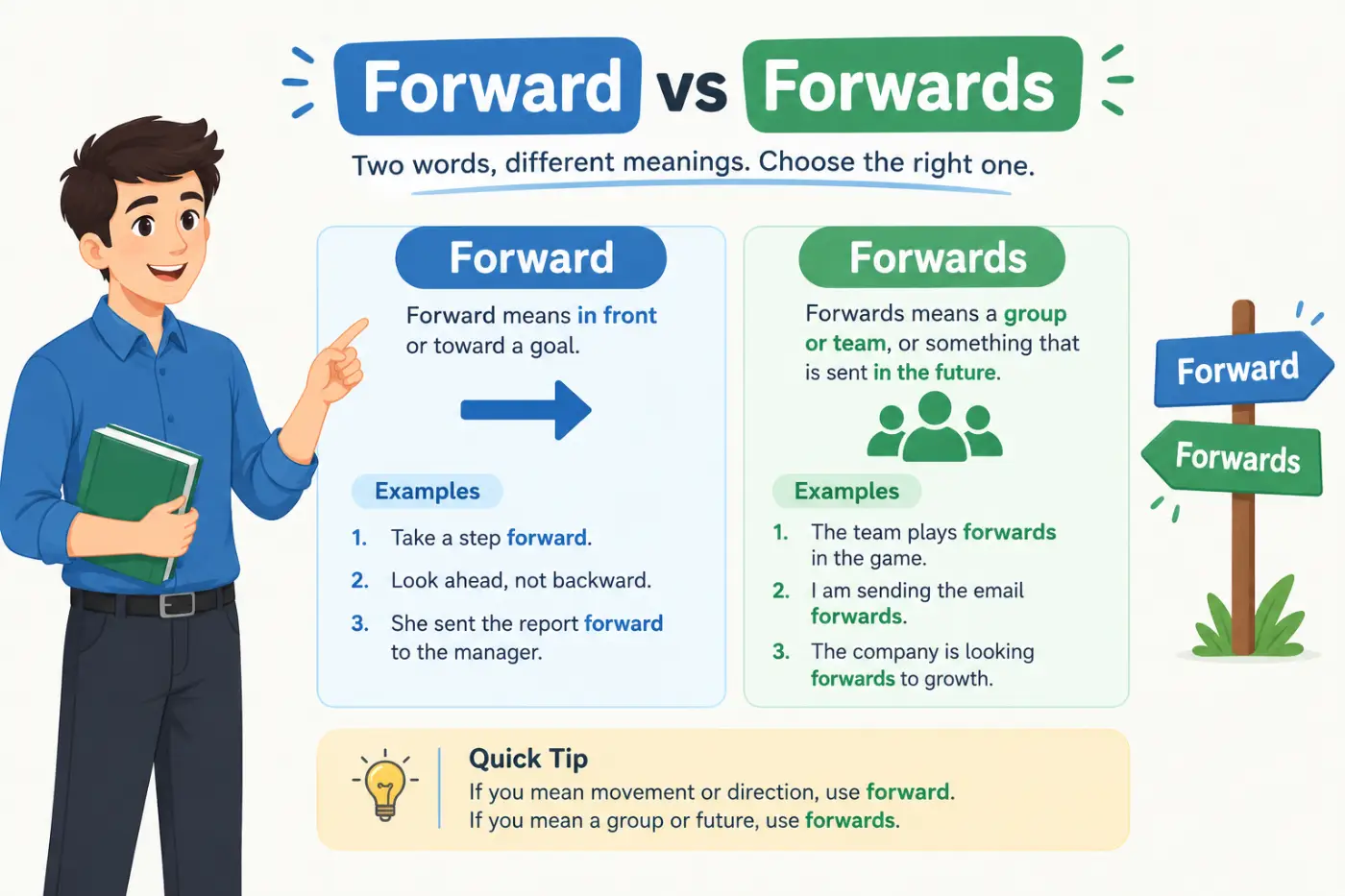
The confusion around Forward vs Forwards is common because both words can describe movement, progress, or direction. However, they aren’t always interchangeable. Their meaning, grammar, and use can change depending on the sentence and the type of English you’re writing. Forward and forwards both mean toward the front or in the direction of progress when … Read more

Flaunt vs Flout: Simple Guide to Using Both Correctly (2026)

Flaunt vs Flout

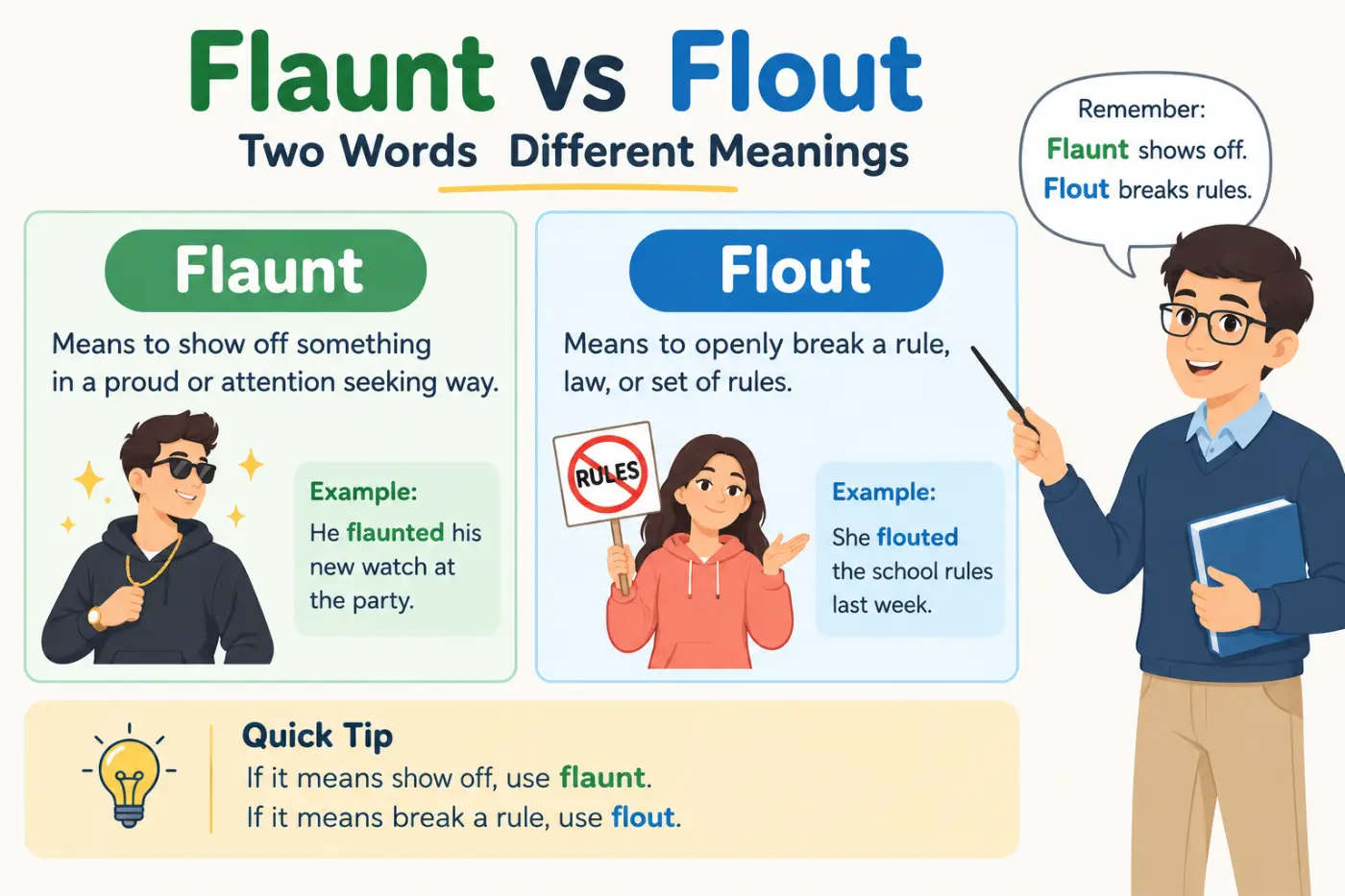
Imagine you’re writing an email about someone who keeps ignoring company rules. You want to explain their behavior, but you’re stuck between two similar words: flaunt vs flout. They look alike, sound somewhat similar, and often appear in discussions about confidence, authority, and behavior. The confusion is common because both words can describe actions that … Read more

Fewer vs Less Simple Guide With Examples (2026)

Fewer vs Less

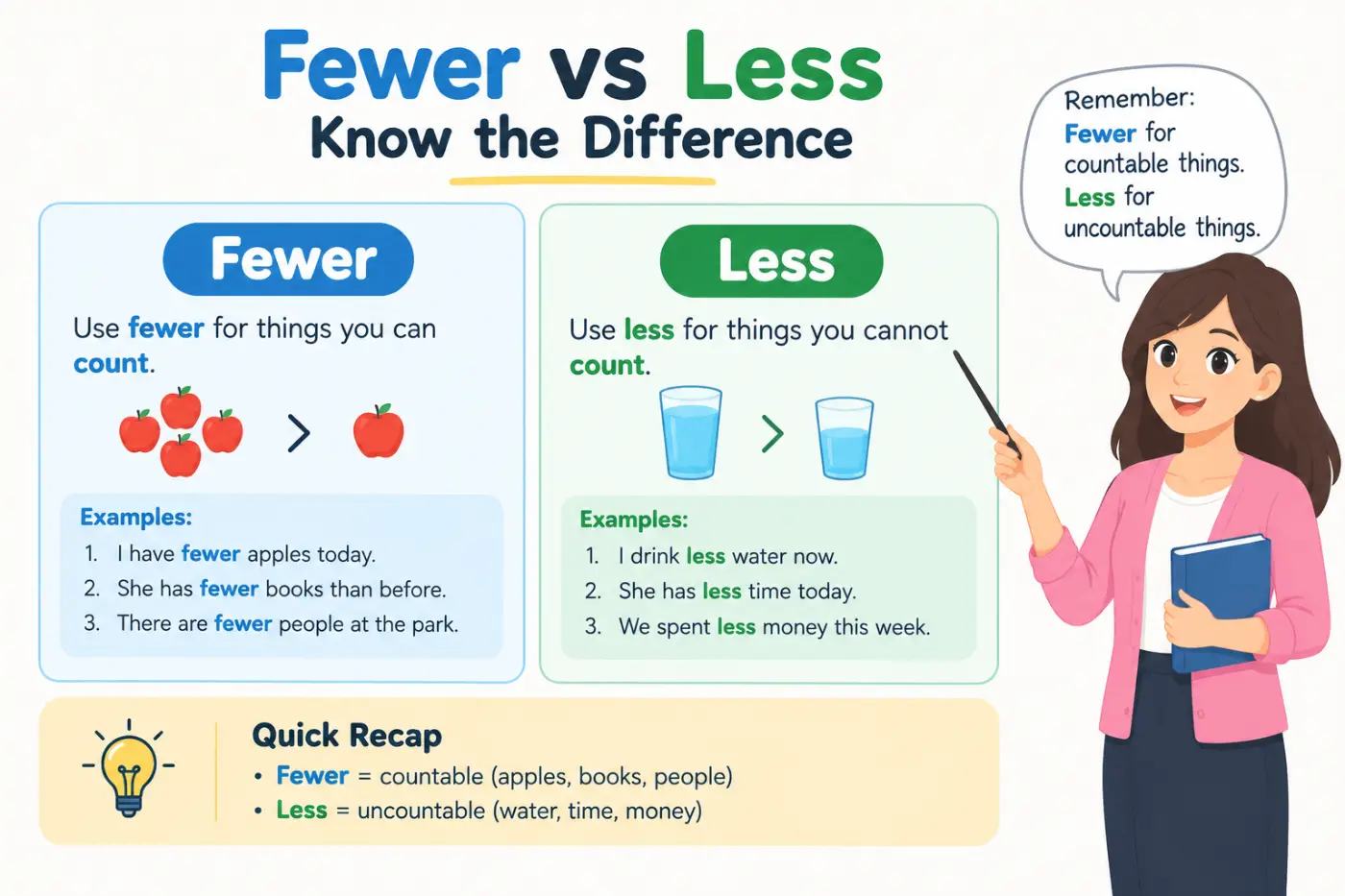
The confusion between Fewer vs Less is common because both words describe a smaller amount. However, they don’t always work with the same types of nouns. Understanding this difference helps you write clearer sentences without second-guessing yourself. Fewer is generally used with things you can count individually, such as books, people, and mistakes. Less is … Read more

Felt or Feel Simple Guide With Examples (2026)

Felt or Feel

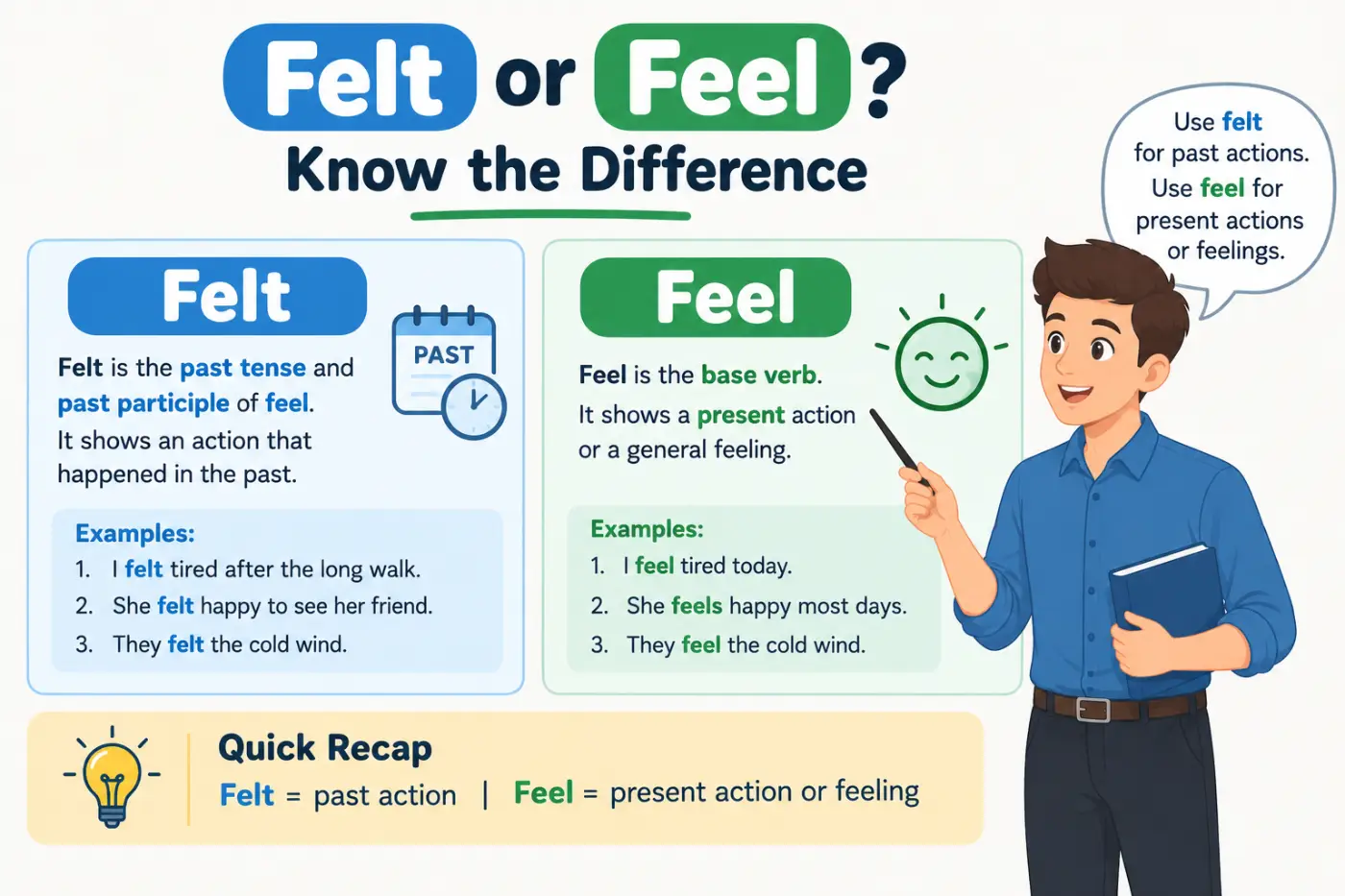
You’re writing an email about yesterday’s meeting, and suddenly, you stop at one sentence: Should you write “I feel happy” or “I felt happy”? Both sound natural, but they don’t express exactly the same thing. The confusion between felt or feel is common because both words describe emotions, physical sensations, opinions, and personal experiences. The … Read more

Farther vs Further Simple Guide With Examples

Farther vs Further

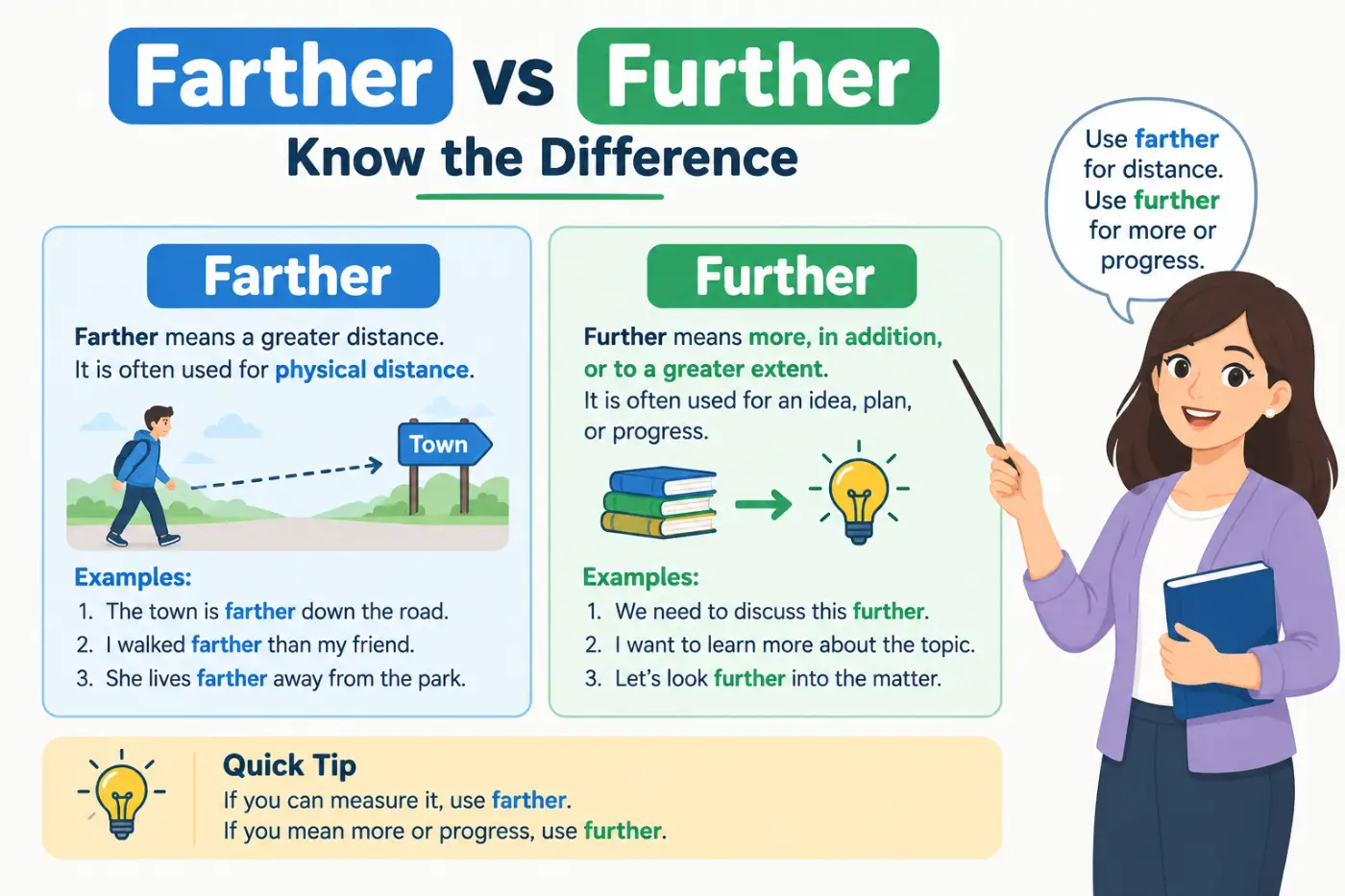
The confusion between Farther vs Further is common, even among native English speakers. These two words look similar, sound similar, and sometimes share the same meaning. However, knowing their differences can make your writing clearer and more accurate. Farther usually refers to physical distance, while further can describe physical distance, additional information, or progress. Both … Read more

Fair vs Fare Guide With Meanings and Examples

Fair vs Fare

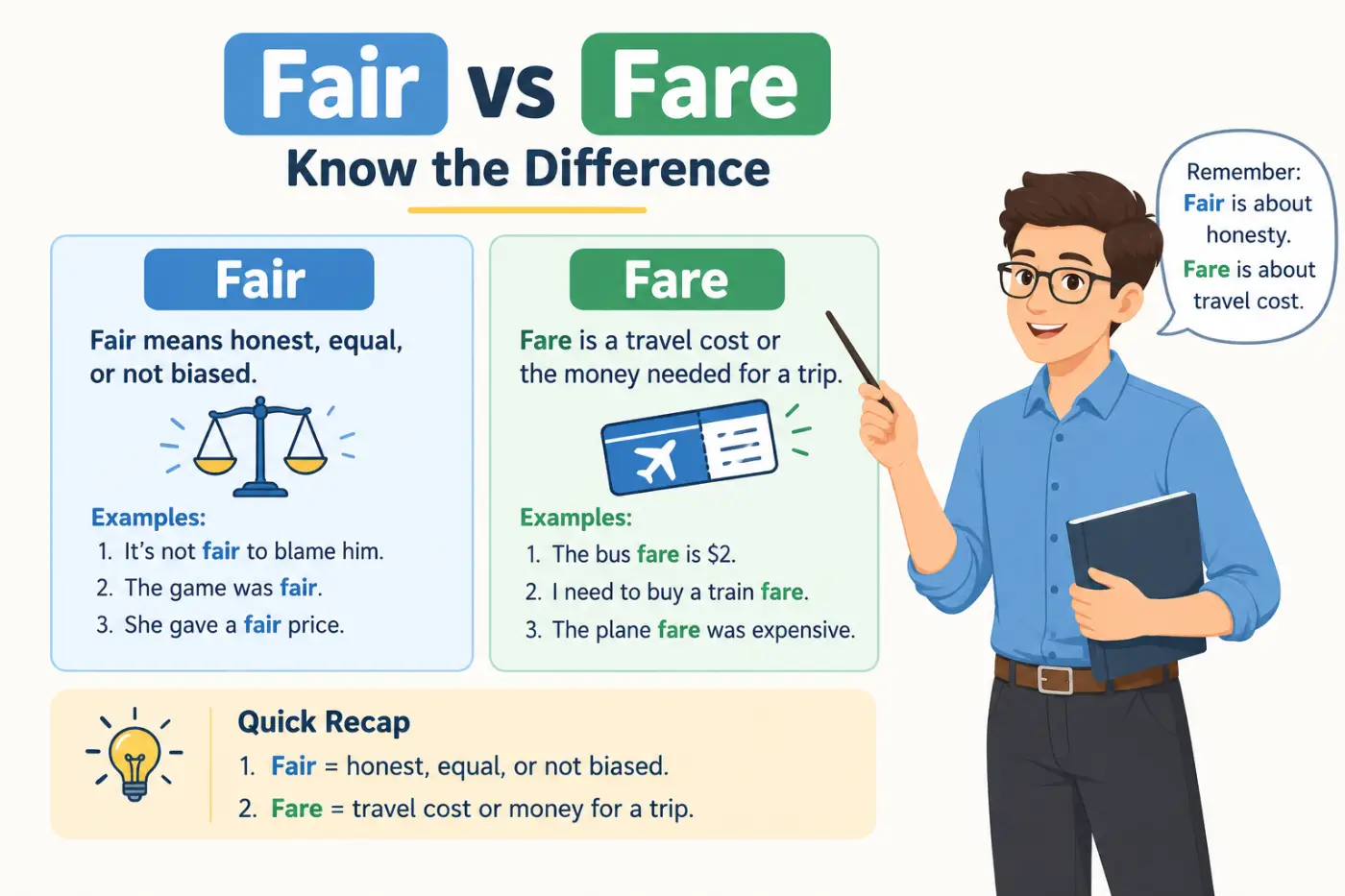
The confusion around Fair vs Fare is common because English has many words that share a pronunciation but have different spellings and meanings. You might see fair in a sentence about equal treatment, while fare often appears when discussing transportation costs. Fair means reasonable, equal, just, or acceptable. It can also refer to an exhibition … Read more