Council vs Counsel: Simple Guide With Examples (2026)

Council vs Counsel

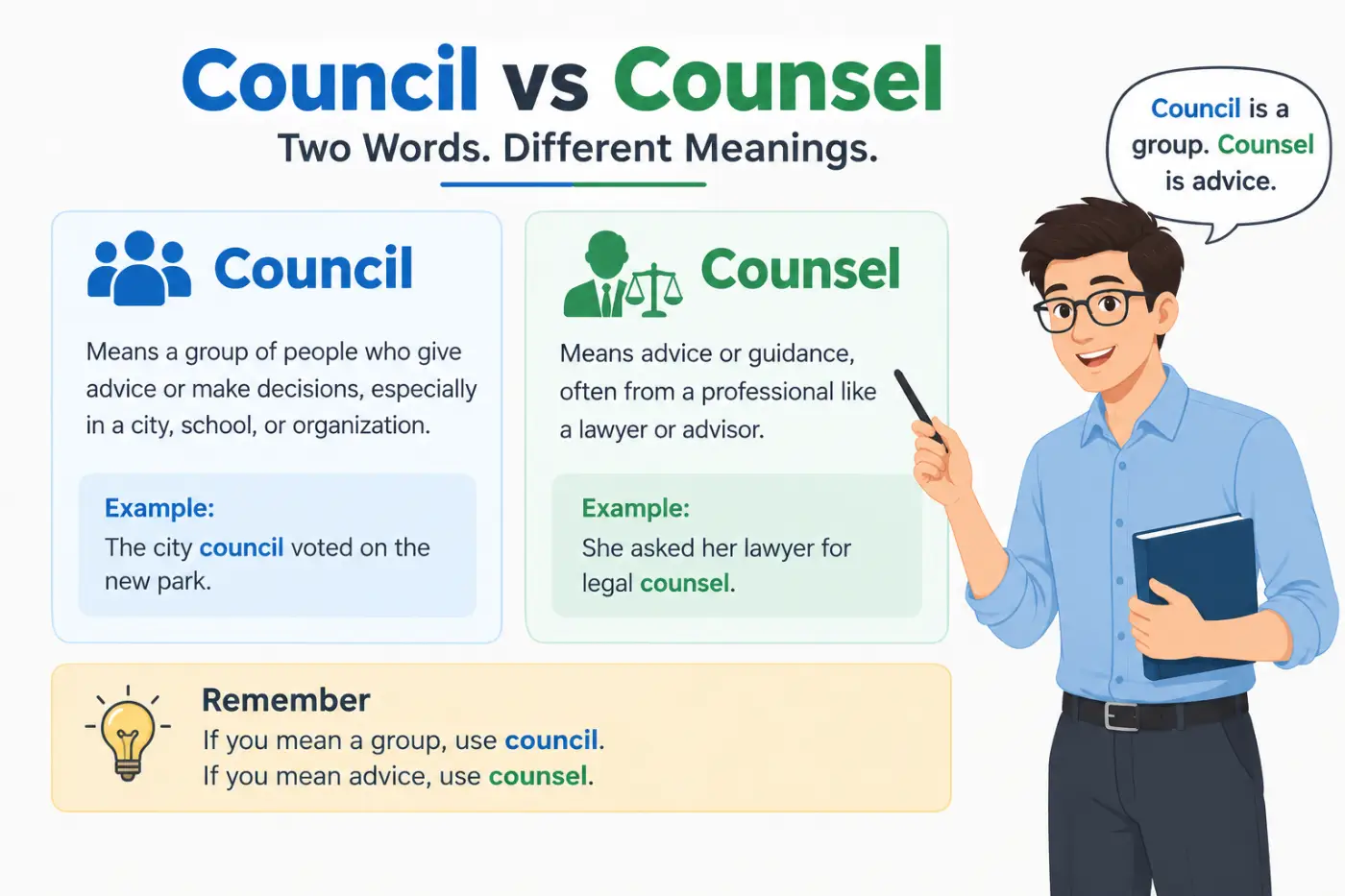
Understanding council vs counsel is especially helpful when writing essays, business emails, legal documents, and professional reports. Both words appear in formal English, so even experienced writers sometimes mix them up. Council refers to a group of people who meet to discuss issues or make decisions. Counsel means advice, guidance, or the act of giving … Read more

Could vs Would: Simple Guide With Clear Examples (2026)

Could vs Would

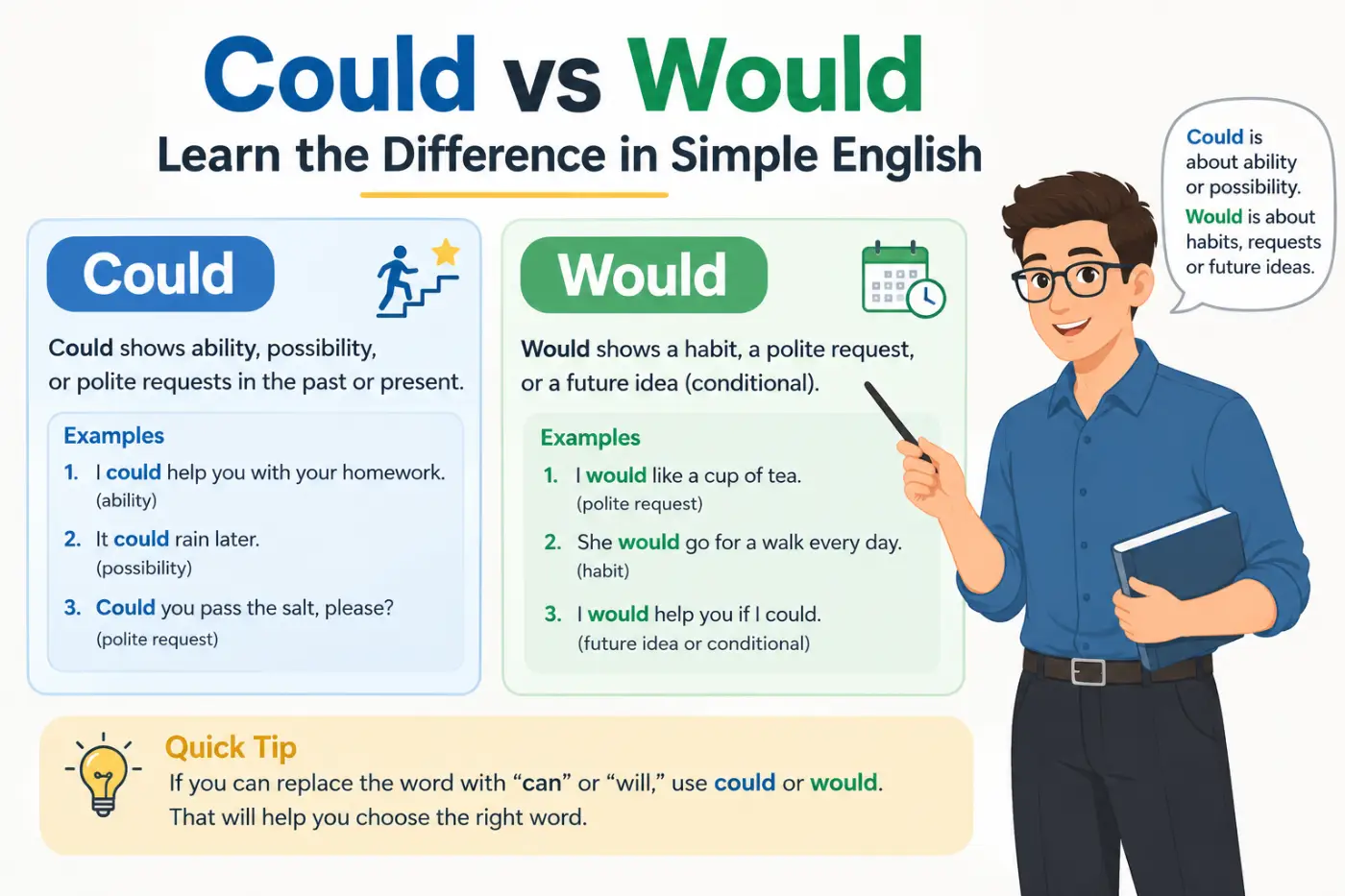
Understanding could vs would can make your writing clearer, more natural, and more polite. These two words appear in everyday conversations, professional emails, essays, questions, and even job interviews. Although they sometimes appear in similar sentences, you cannot always exchange one for the other. Could expresses ability, possibility, or a polite request. Would expresses willingness, … Read more

Could or Can: Simple Guide to Using Both Correctly (2026)

Could or Can

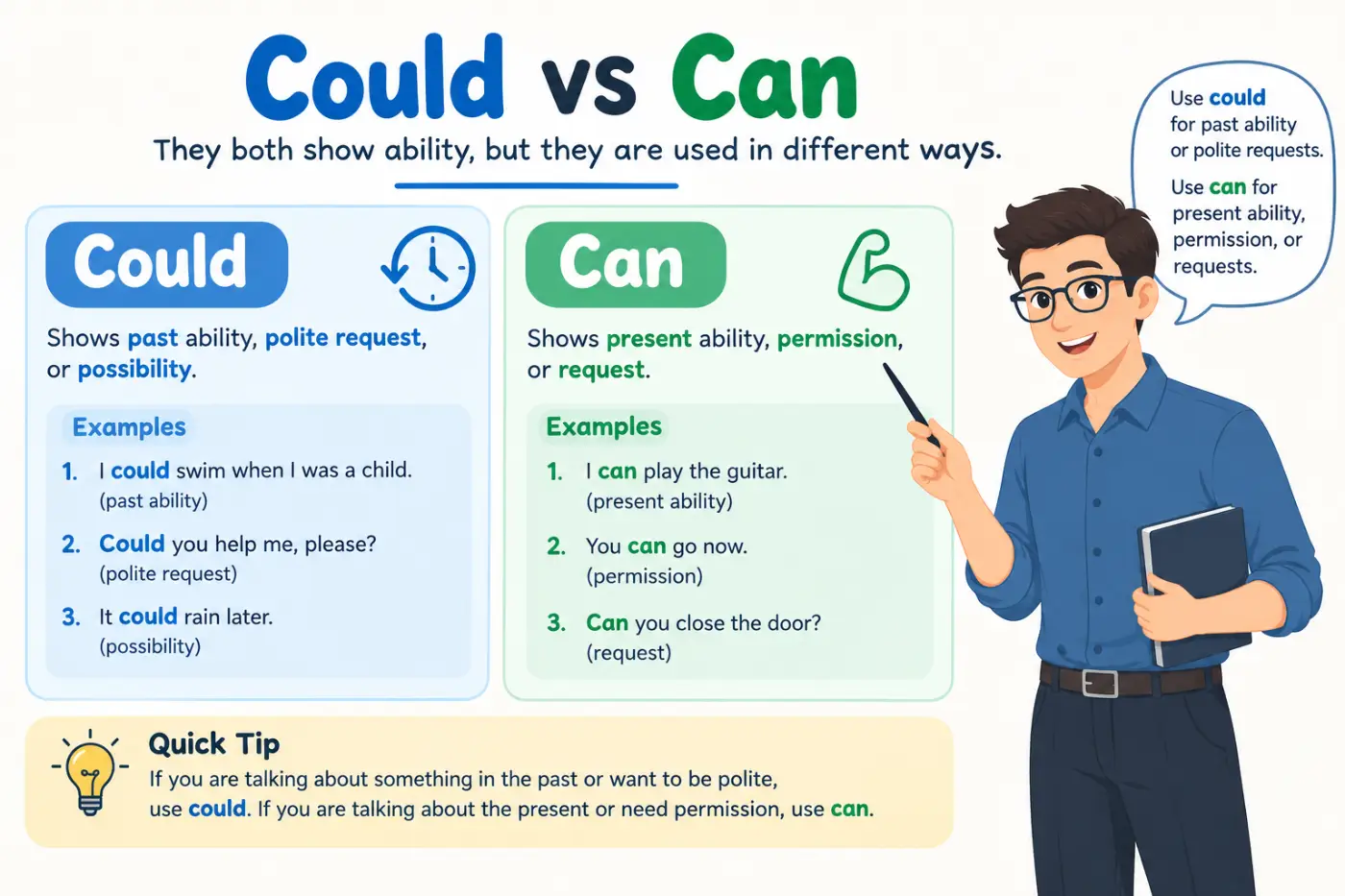
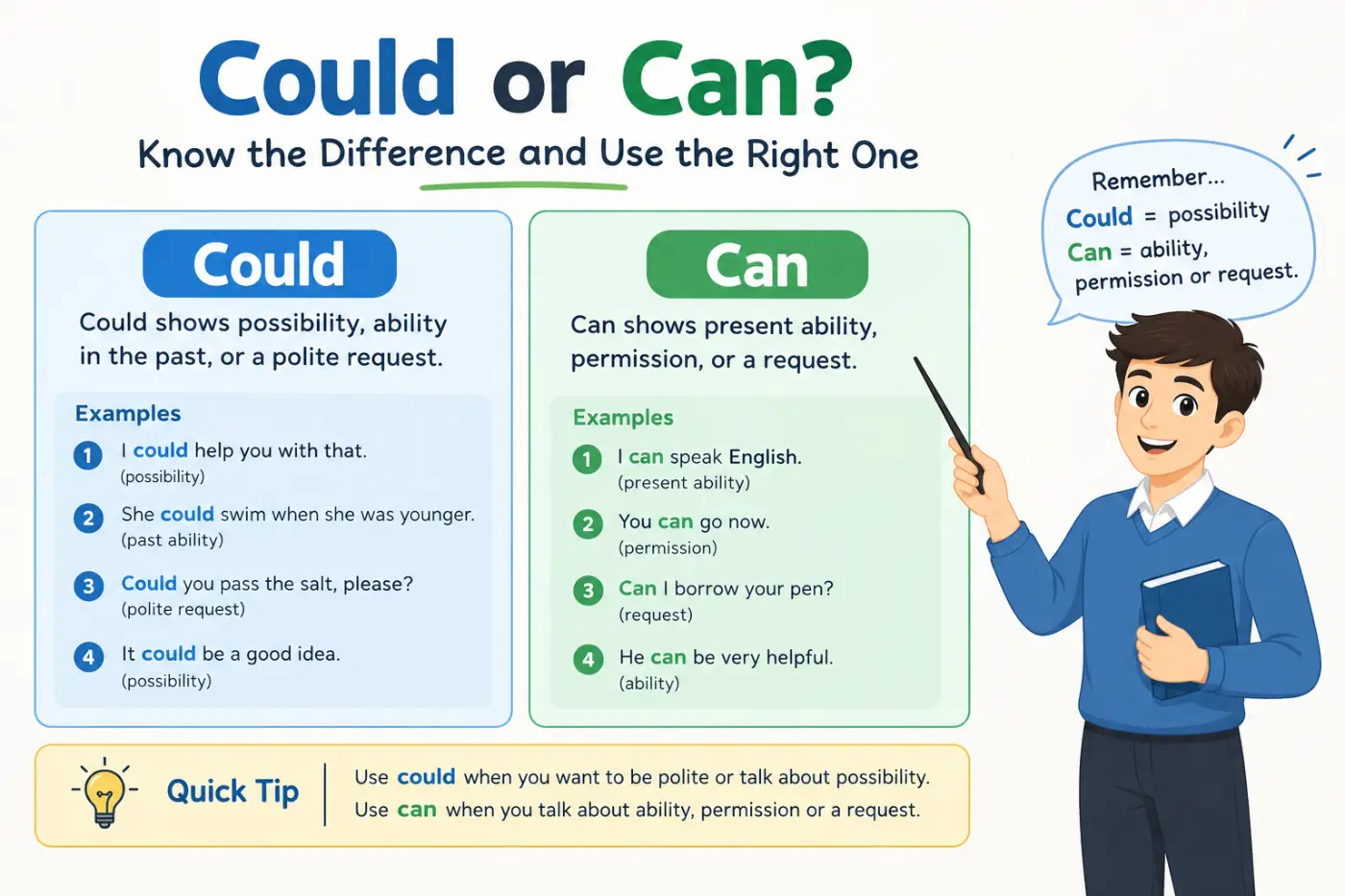
Understanding Could or Can is easier than it seems. These two words often express ability, permission, requests, and possibility. However, they don’t always mean the same thing. Your choice depends on the situation, the time you’re talking about, and the tone you want to create. Can usually expresses present ability, permission, or possibility. Could often … Read more

Correct or Correctly: Simple Grammar Guide With Examples

Correct or Correctly

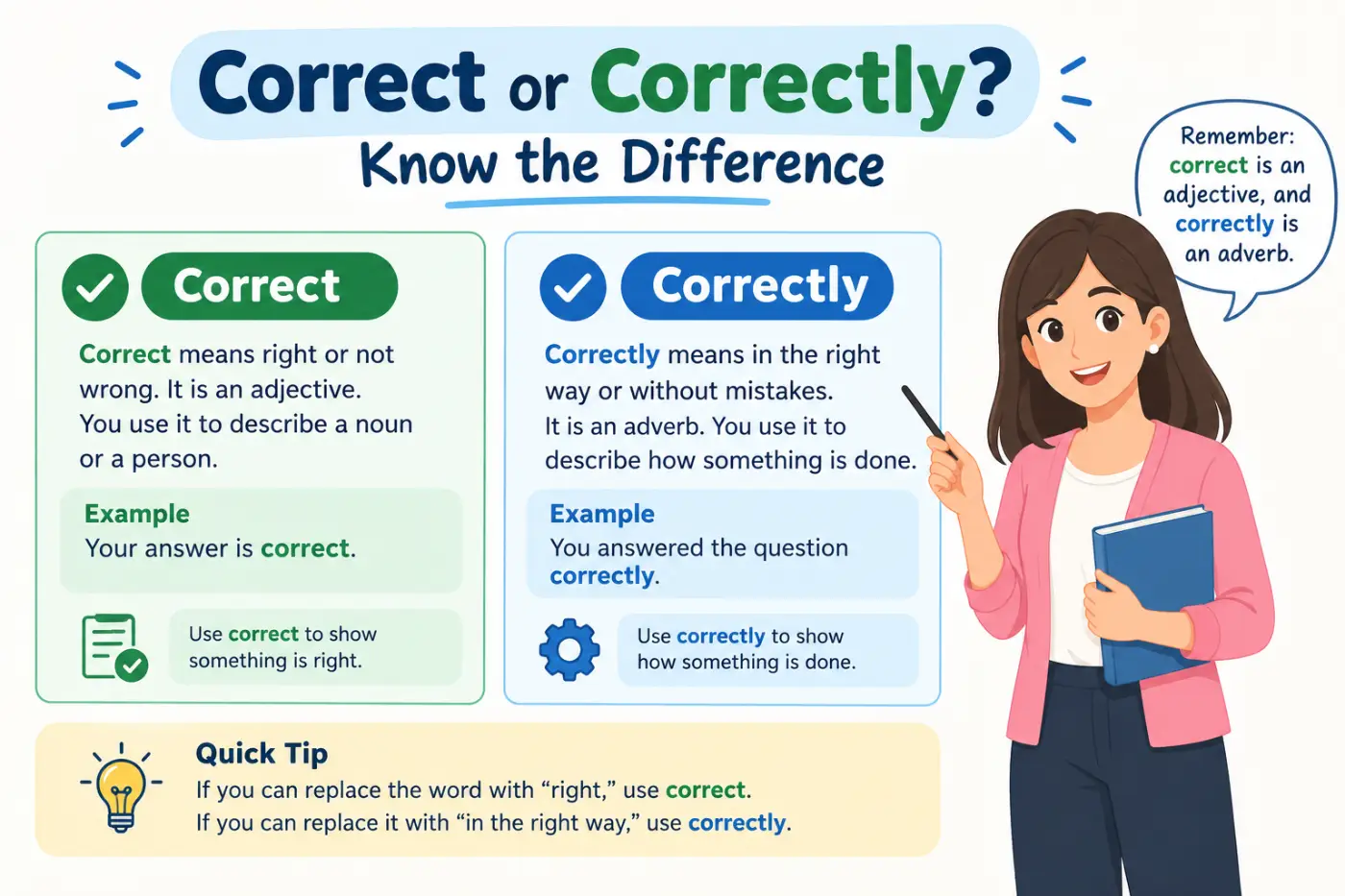
The confusion between Correct or Correctly is common because both words relate to accuracy. However, they serve different purposes in English grammar. One usually describes a person, thing, or result, while the other explains how someone performs an action. Correct is usually an adjective that means right, accurate, or free from mistakes. Correctly is an … Read more

Content vs Context: Simple Guide With Clear Examples

Content vs Context

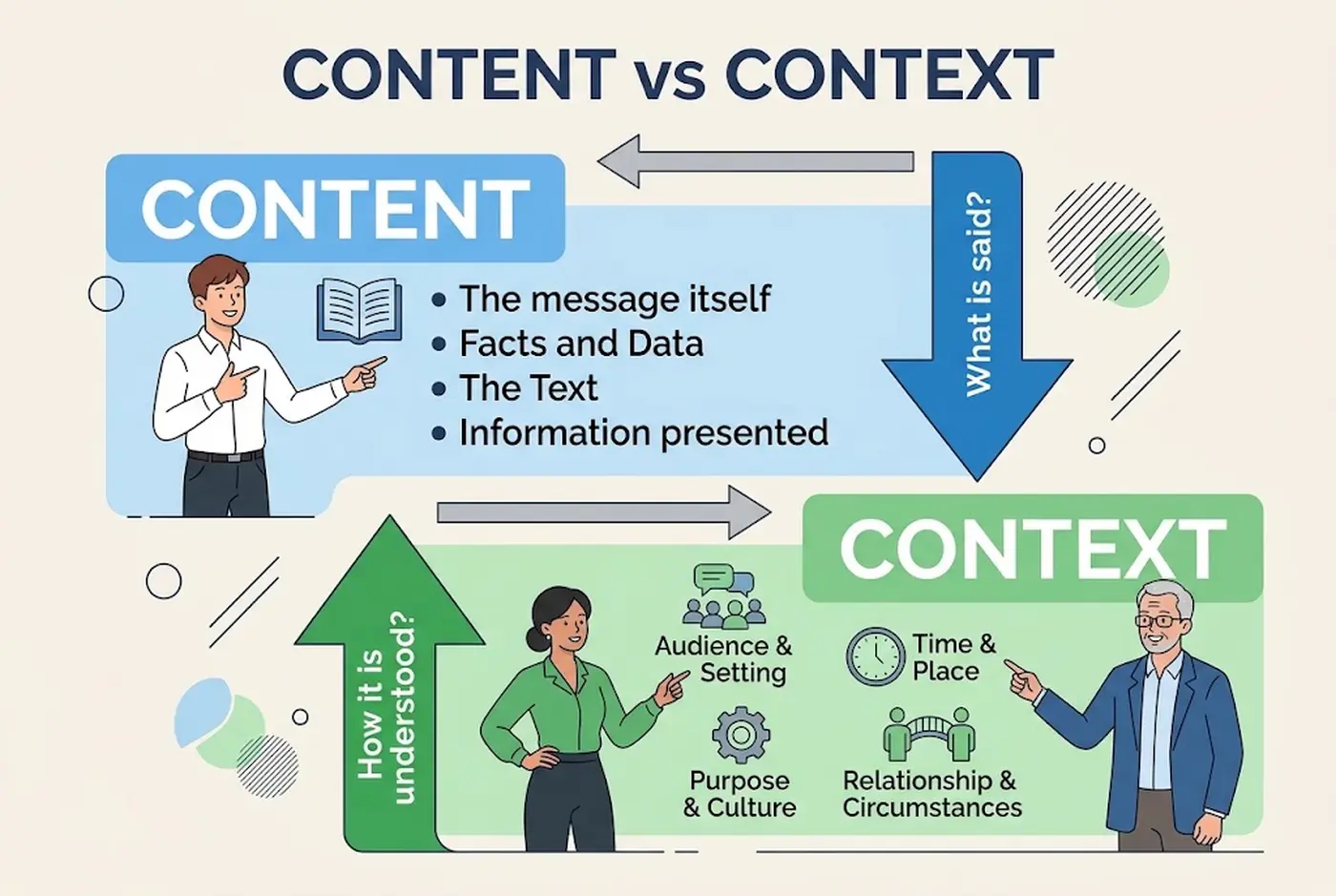
Imagine you’re writing an email to your manager. You explain that a project is delayed, but you don’t mention the reason behind the delay. Your message contains useful information, yet your manager may misunderstand the situation. This is a simple example of why understanding Content vs Context matters in everyday communication. Content is the actual … Read more

Constant vs Consistent Simple Guide With Examples (2026)

Constant vs Consistent

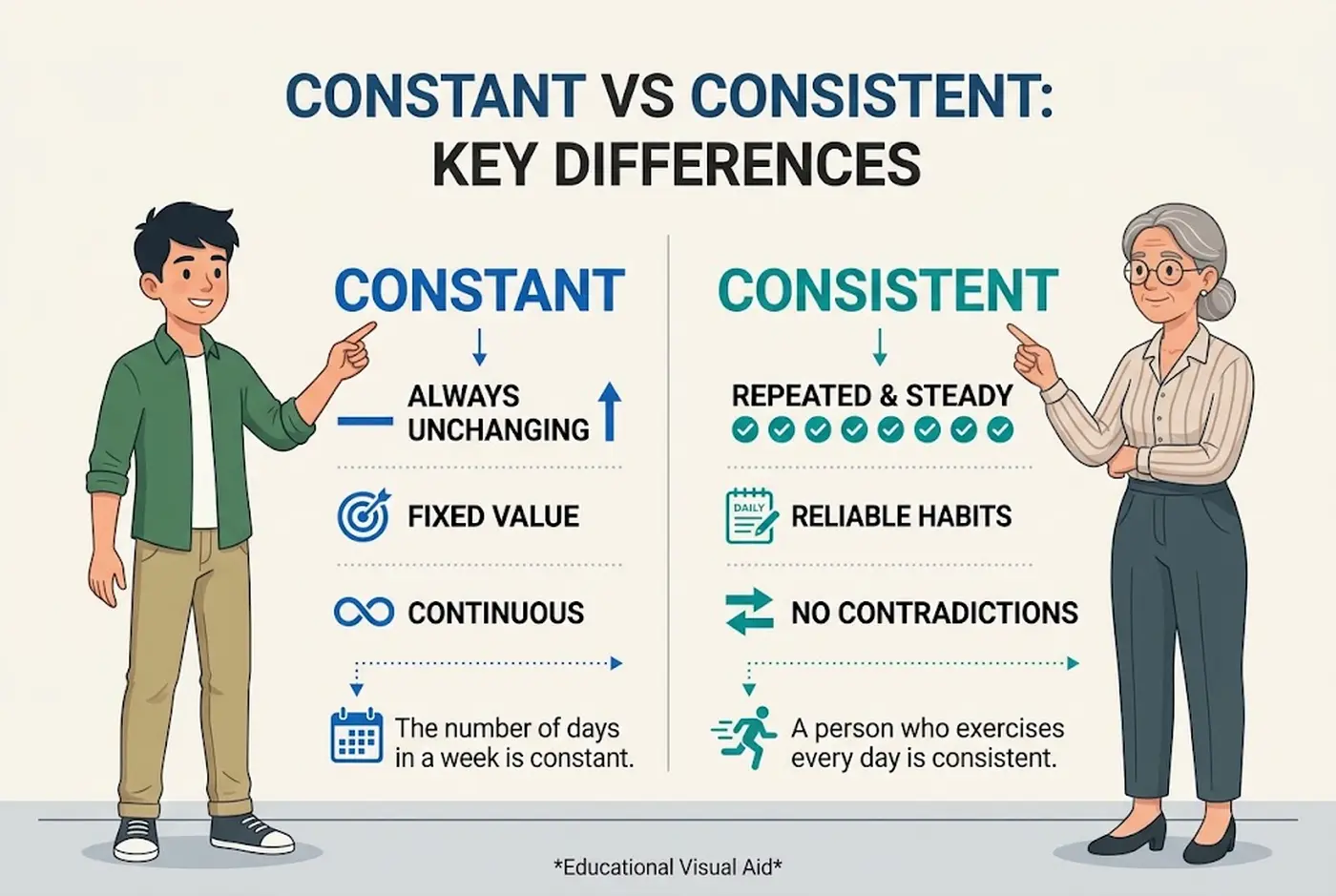
The confusion between Constant vs Consistent is common in everyday English. You might hear someone talk about constant effort, consistent progress, constant communication, or consistent results. These expressions sound similar, yet each gives the reader a slightly different message. Constant means something happens continuously or repeatedly, often without much of a break. Consistent means something … Read more